
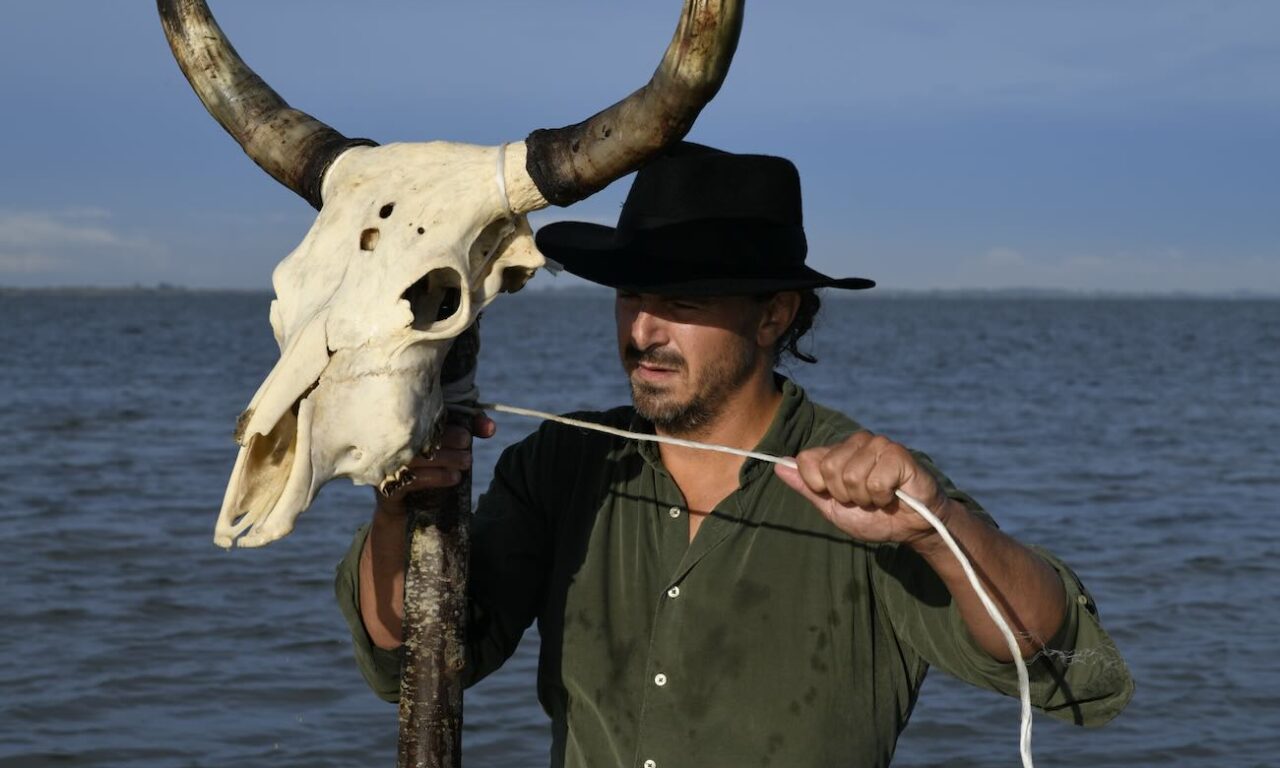
With Stanislas Blohorn, the Camargue is not just something to admire: it is something to experience, to listen to and to taste. Or, as he likes to put it: “That’s how the Camargue enters you. Through the body.”
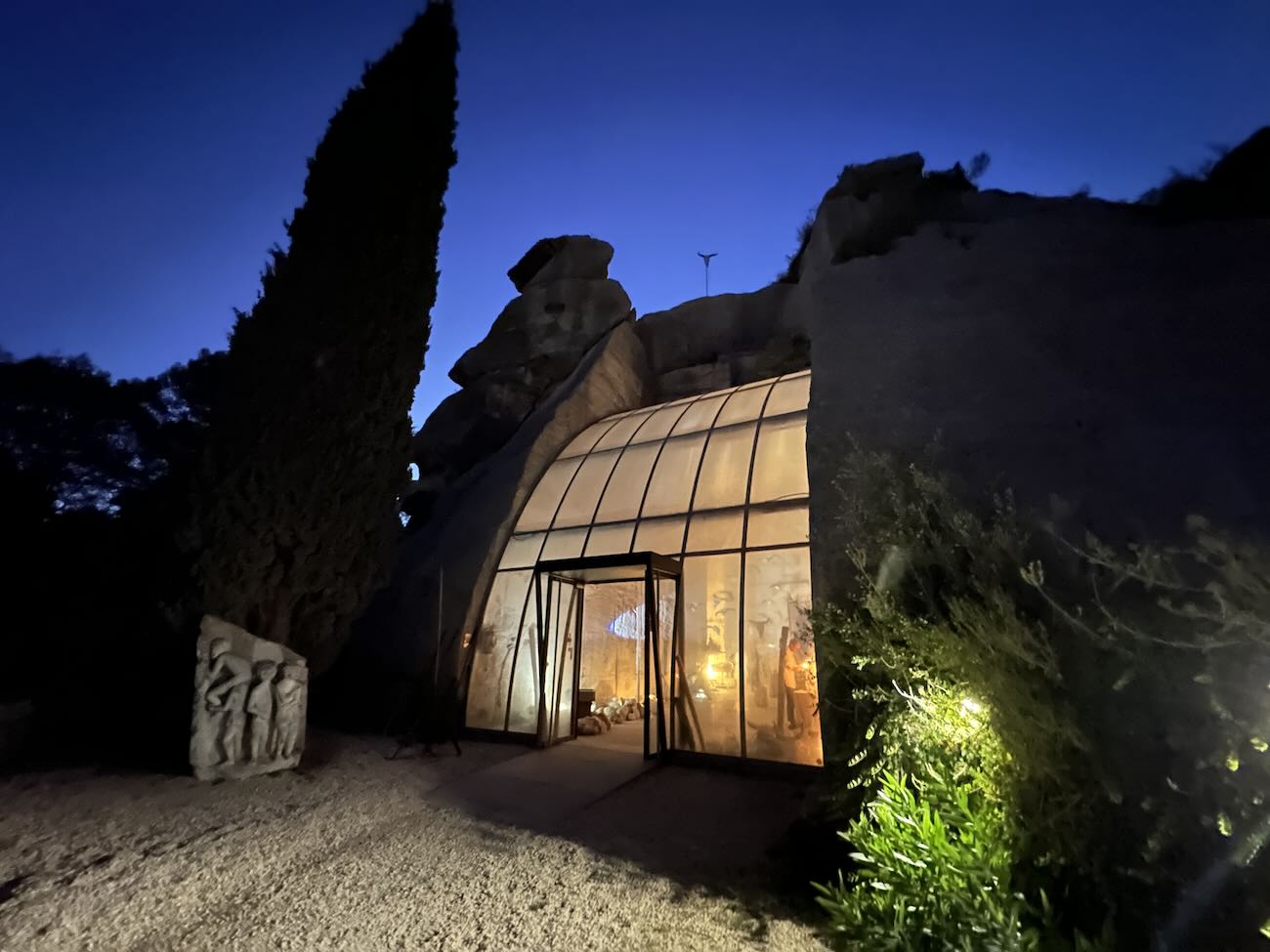
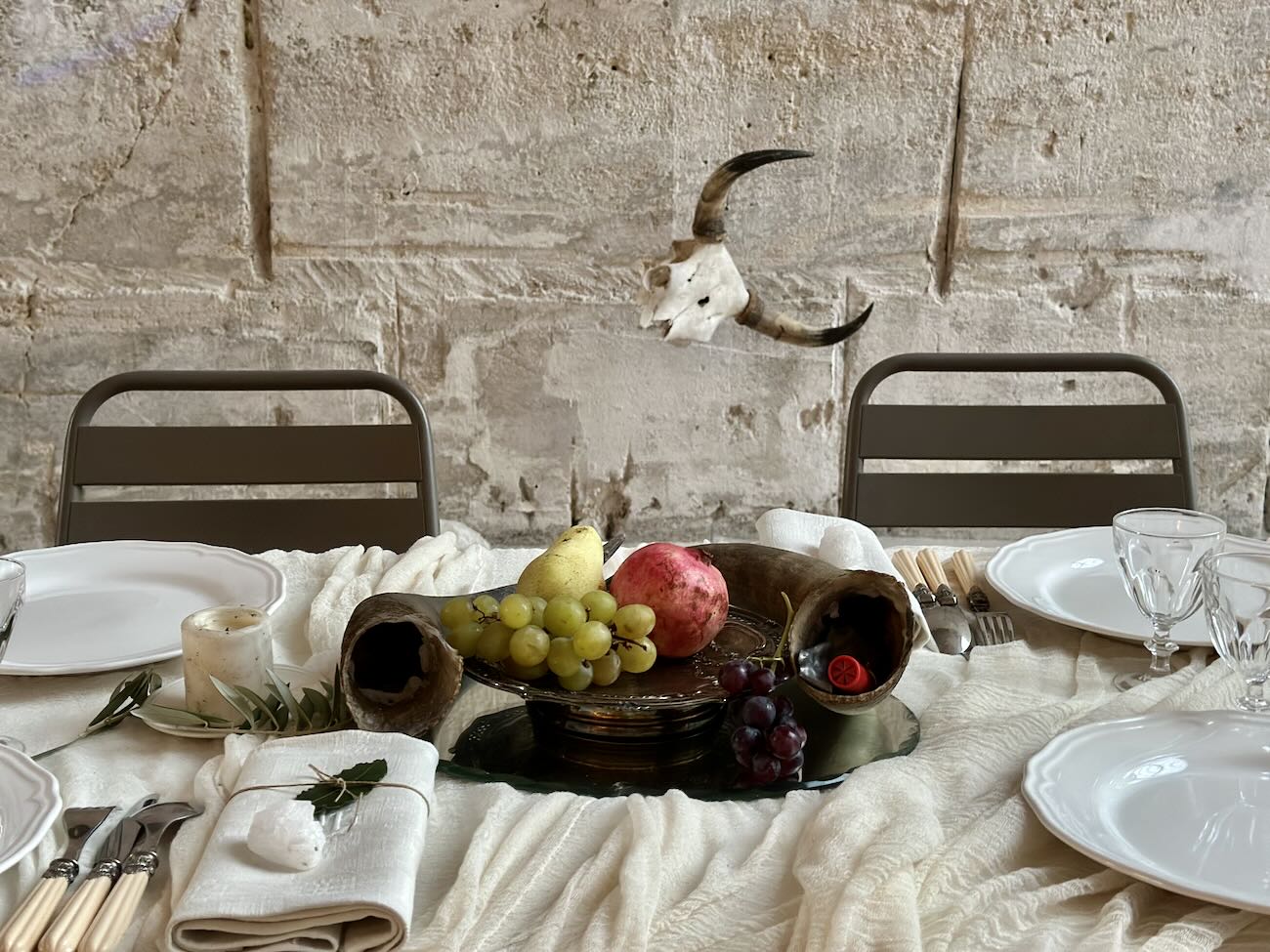
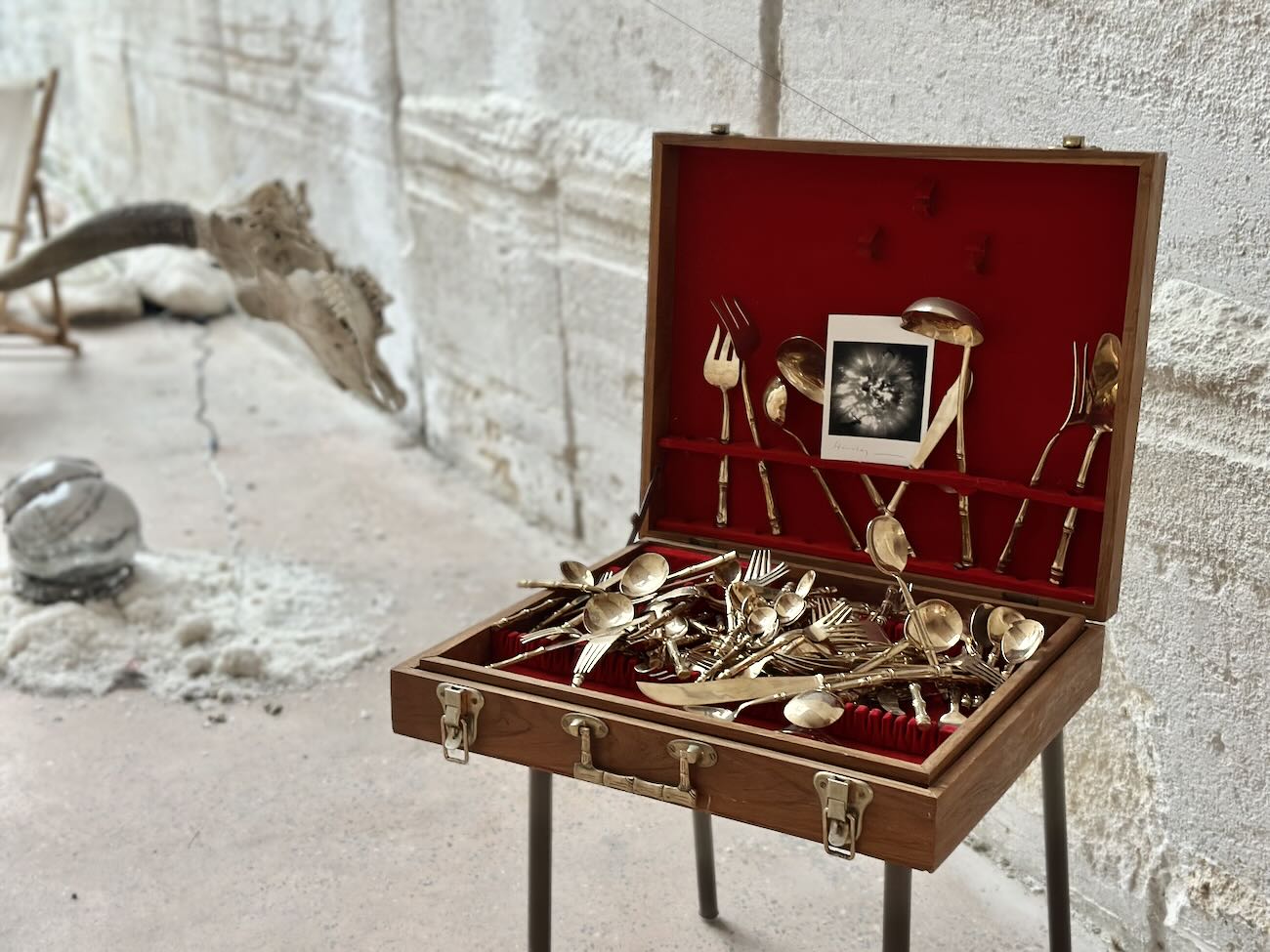
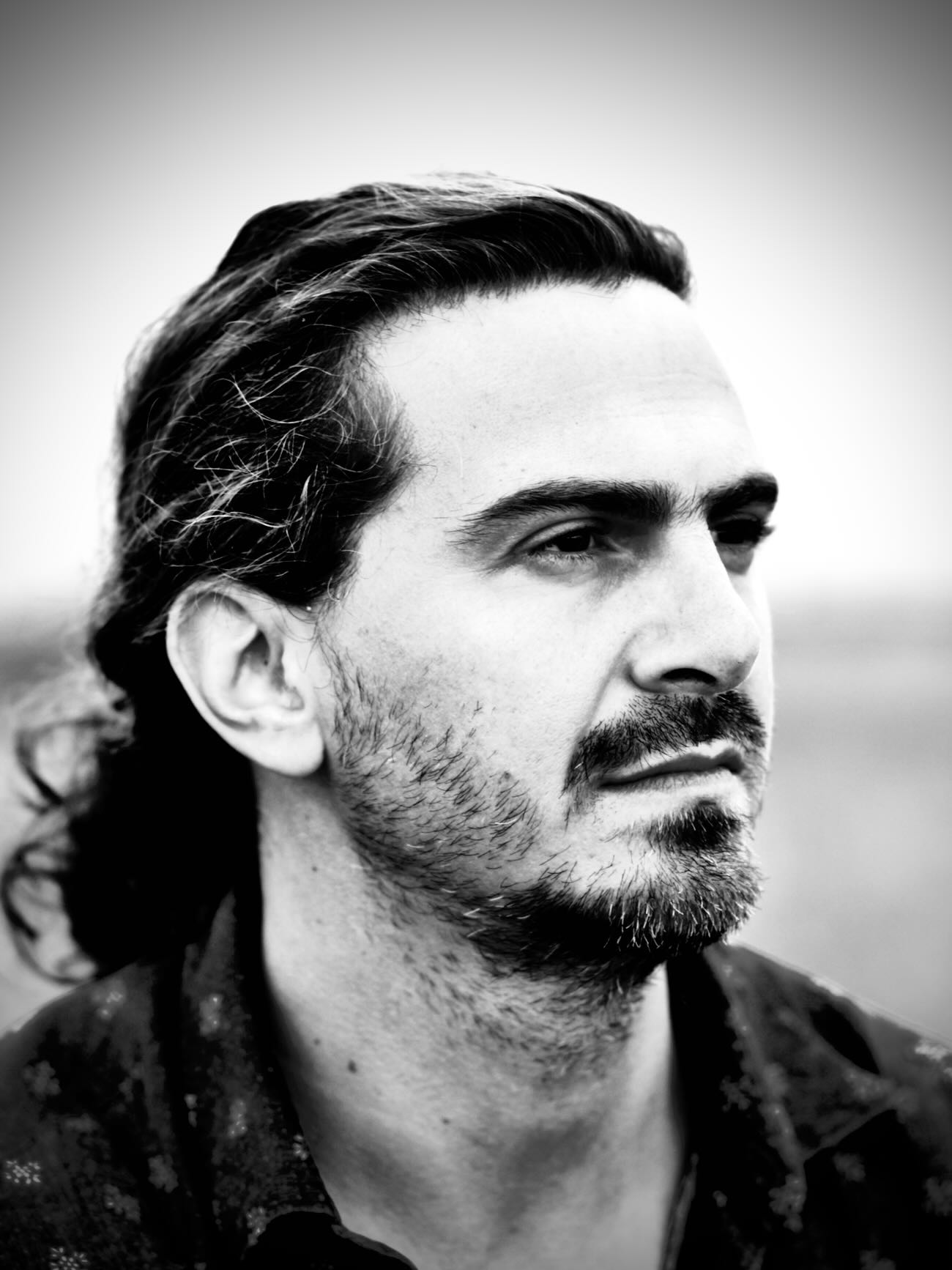
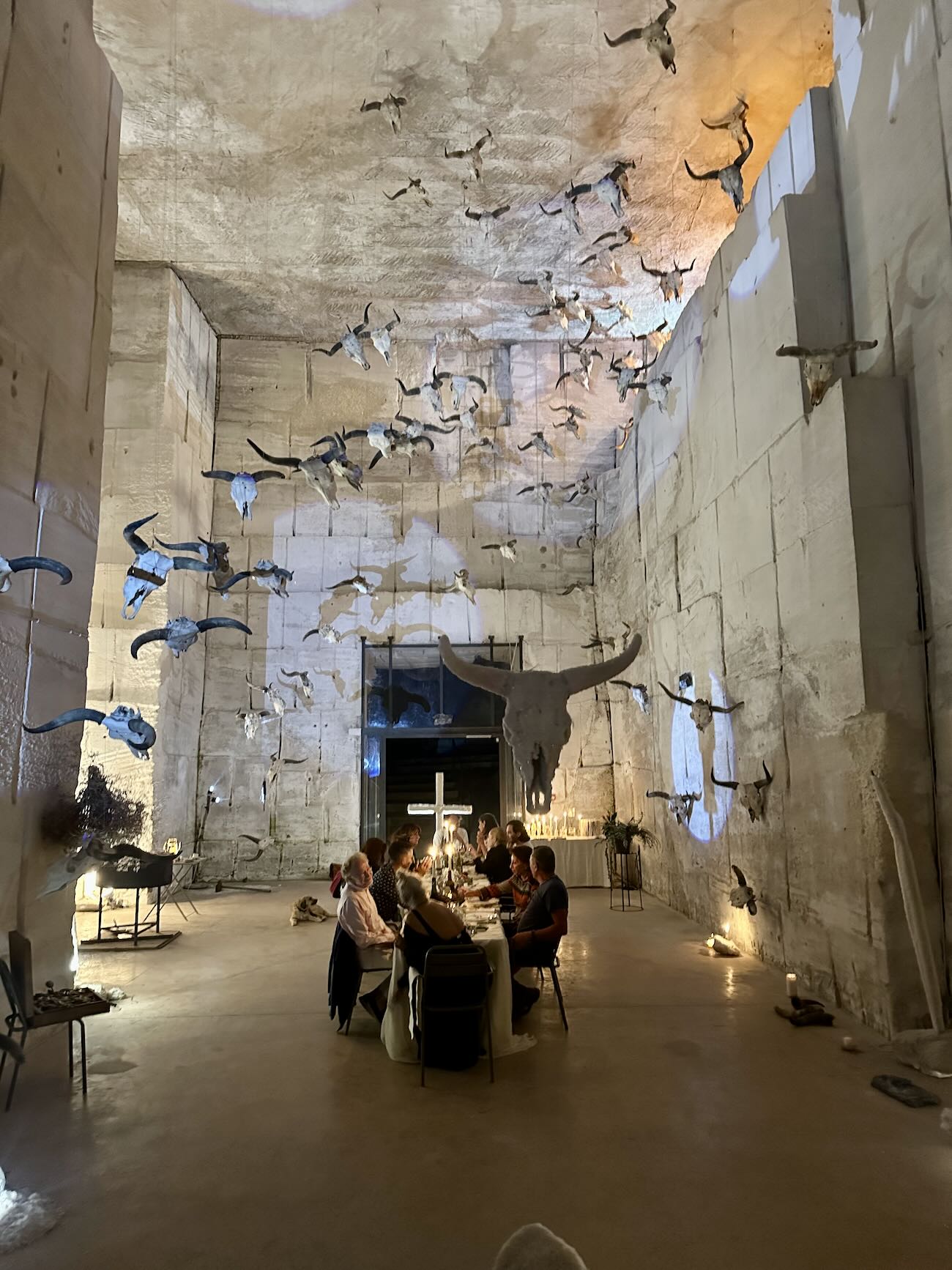
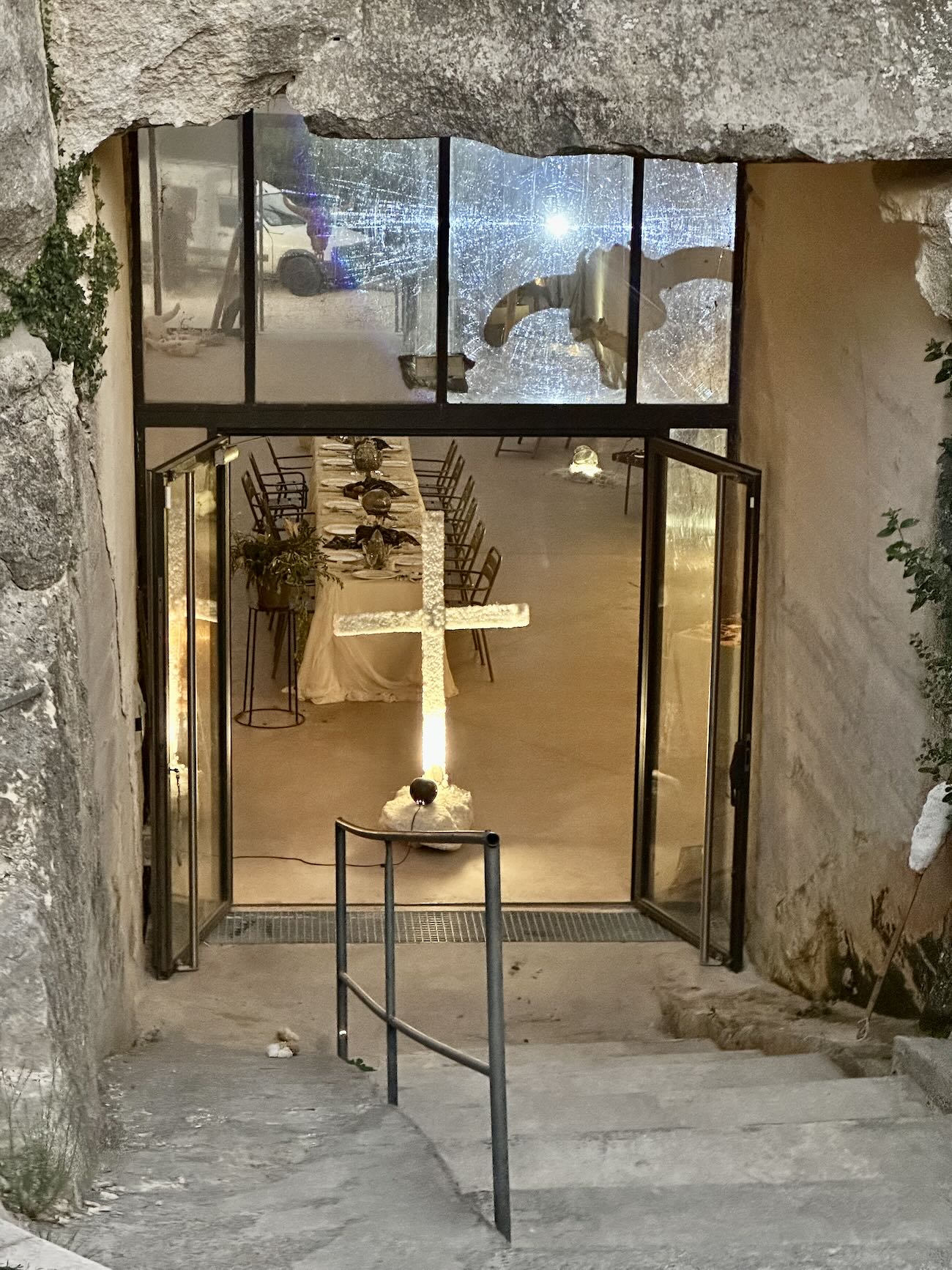
It was in an almost surreal setting that we met Stanislas Blohorn: in the heart of the Val d’Enfer, inside a quarry resembling a mineral cathedral, beneath his installation TROUPEAU. A visual artist, photographer, gardian (Camargue cowboy) and passionate lover of the Camargue, he was also in the kitchen that evening for La Cuisine du Delta – “At the Table of Silence d’Orphée”. Twelve guests gathered around a table for a culinary journey through the Camargue, “from land to sea”, featuring duck, eel, wild boar, snipe, salt, iodine and sounds recorded across the region. An experience that perfectly embodies his Mouvement Delta, where the boundaries between artistic creation, cuisine, the environment and the passing on of knowledge and traditions fade away.
You are an artist, but also a gardian, deeply rooted in the Camargue. Was Mouvement Delta born primarily out of an artistic vision, or from a desire to protect a territory that you now feel is under threat?
I was a gardian first. And I began by encountering those gazes, the eyes of the men and women I grew up with — farmers, fishermen, agricultural workers. I listened to their stories. And I felt entrusted with what I saw in their eyes.
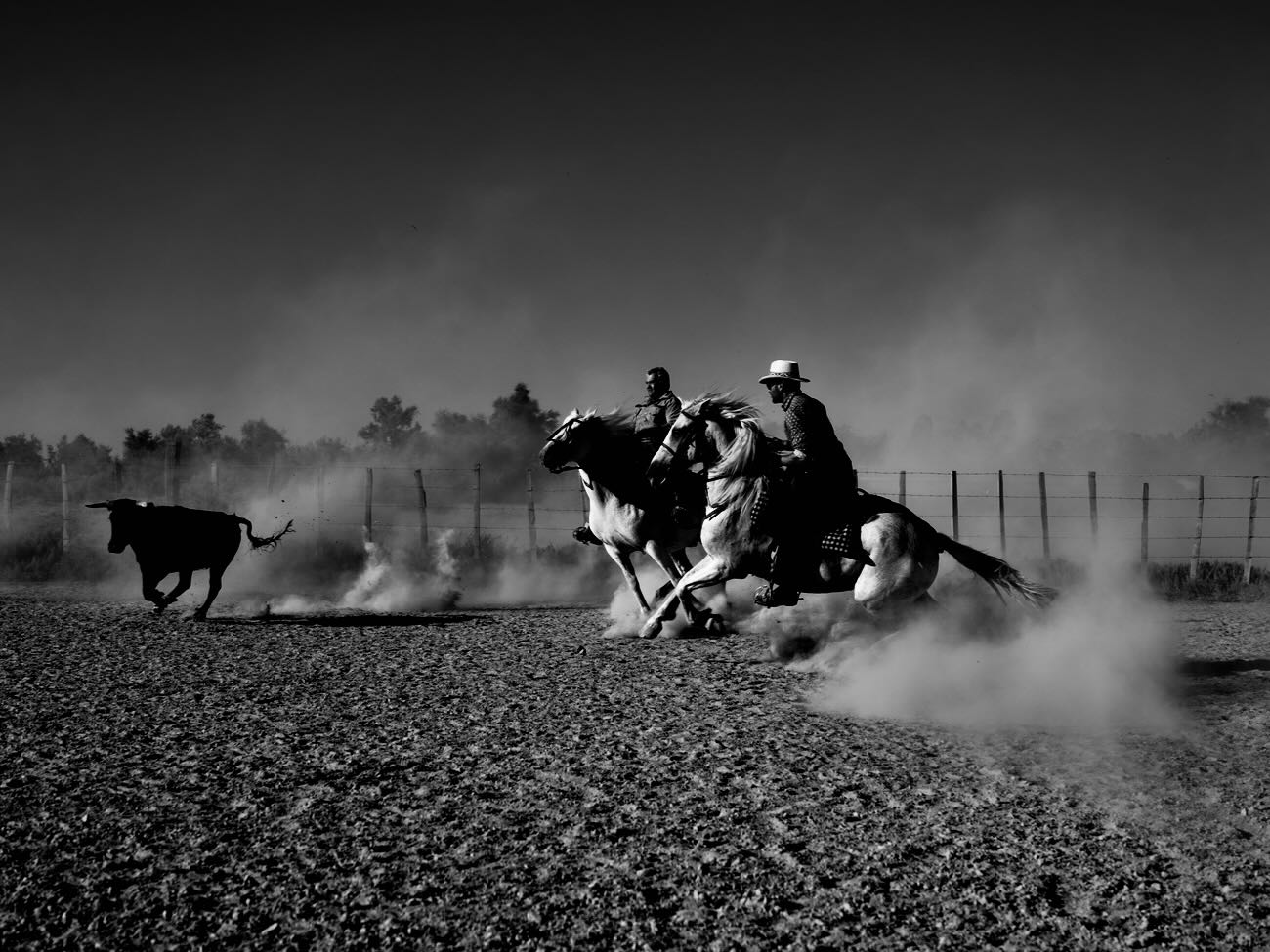
I grew up at Mas de Carrelet, our family farmhouse overlooking the Vaccarès lagoon, surrounded by the bulls and horses of the Blohorn manade. Before I even knew I would become an artist, I learned to observe the animals, the water, the grasslands.
My grandmothers, the old Provençal men I used to go hunting with, and my father all nurtured that curiosity. I had an appetite for everything — smells, tastes, their stories. To me, Provence is all that poetry, that minerality, that silt. Cooking was already part of it too, along with the desire to welcome people and share experiences.
During Covid, I returned to live at Carrelet, on the family ranch. In the mornings, at L’Agachon, a little roadside café on the way to Saintes-Maries-de-la-Mer, we would meet a shepherd, a gardian, a builder, a rice farmer, a reed cutter. That wealth of different knowledge fascinated me. But I could also hear their concerns. What moved me was the distress of the local people.
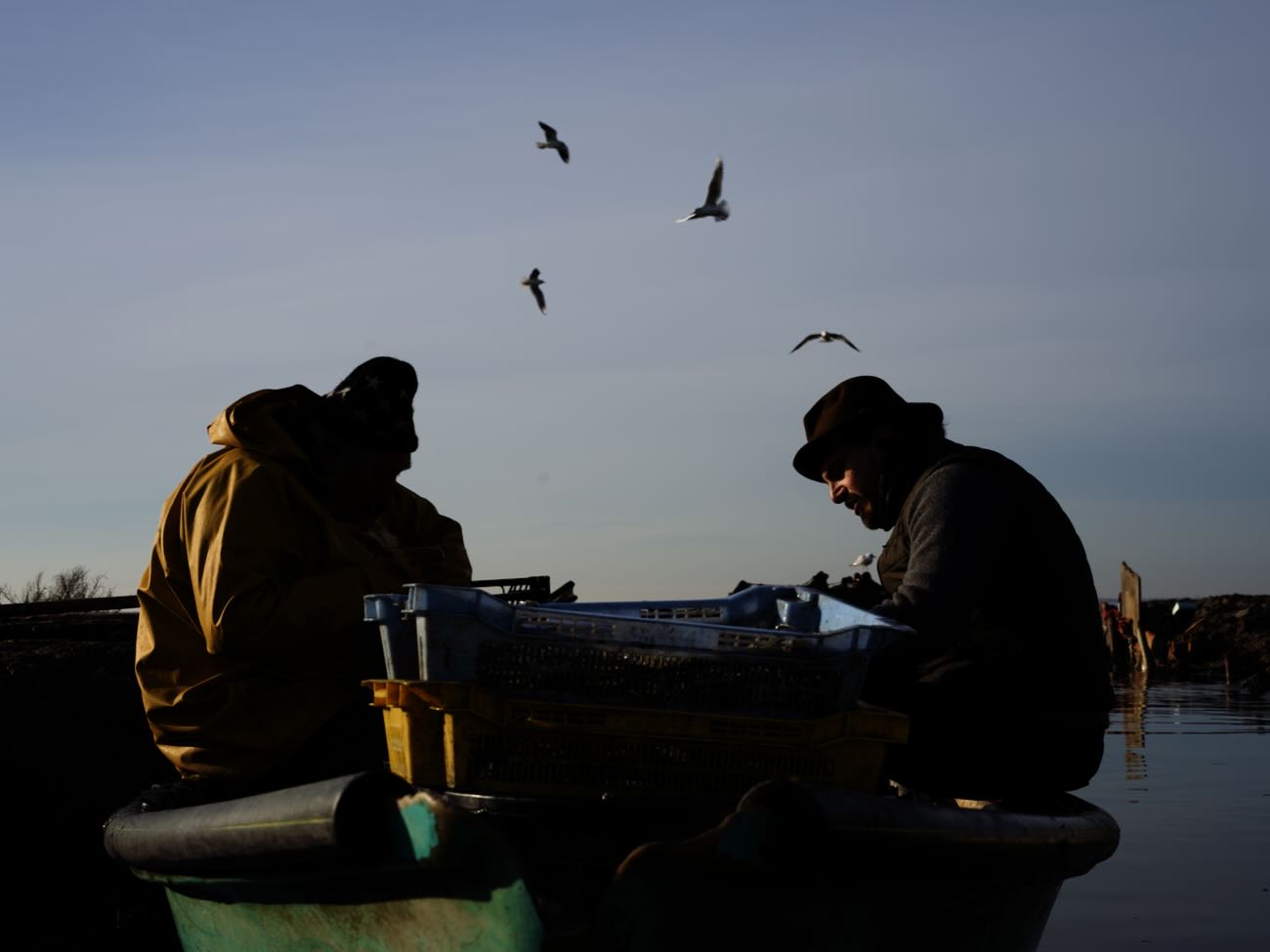
I bought a camera to listen to them, to preserve their words. That became L’Homme et le Vaccarès.
I’ve known Patrick since childhood. In the mornings at Carrelet, I could hear him whistling before I even opened my eyes. Edith Piaf tunes, old songs. He was always there with the animals, whatever the weather. I saw him as a kind of father figure among the gardians.
During Covid, the bullrings were closed. The bulls he had raised for the arena were being sent to the slaughterhouse. They were going to die without ever fighting. And he was crying. His gaze asked nothing of me. His silence crushed me.
I climbed into the truck so they wouldn’t make that final journey alone. Inside, there was their weight, their breathing, the metal, that physical closeness to the animals. At the slaughterhouse, men were doing their jobs. Marcel later taught me how to retrieve the heads.
What I wanted was to accompany those lives, every single one of them. I had to bear witness to what was happening to them.
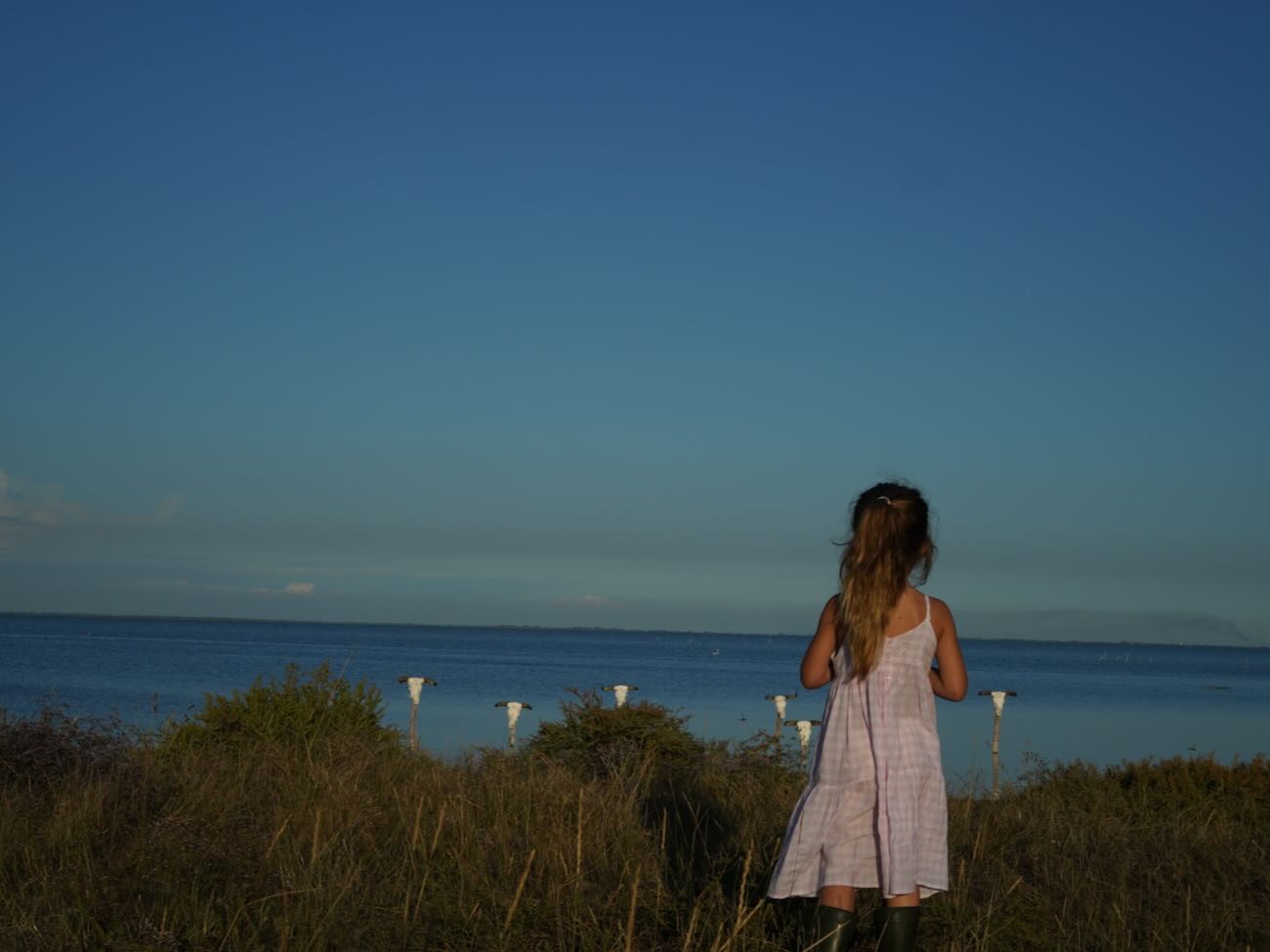
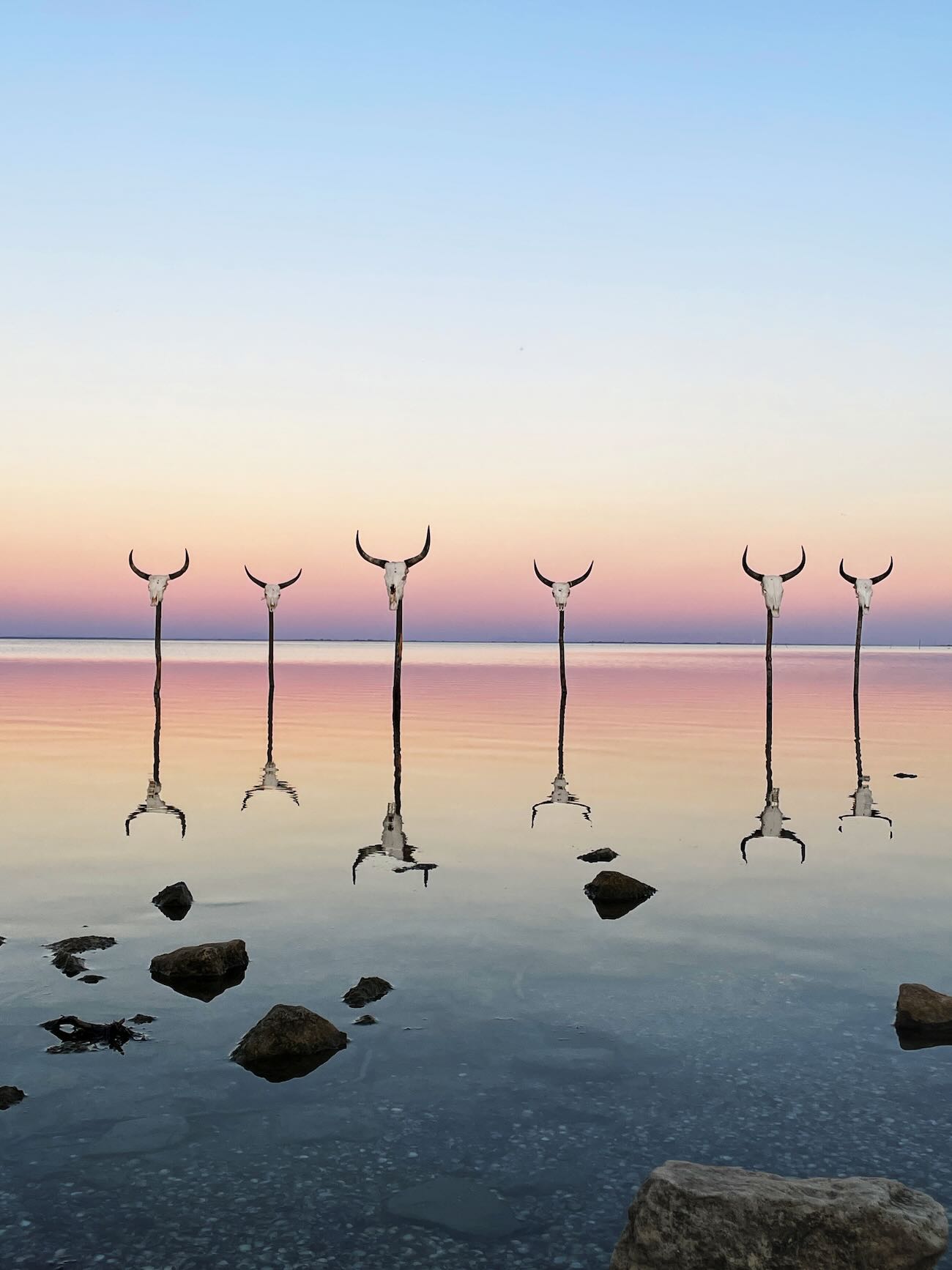
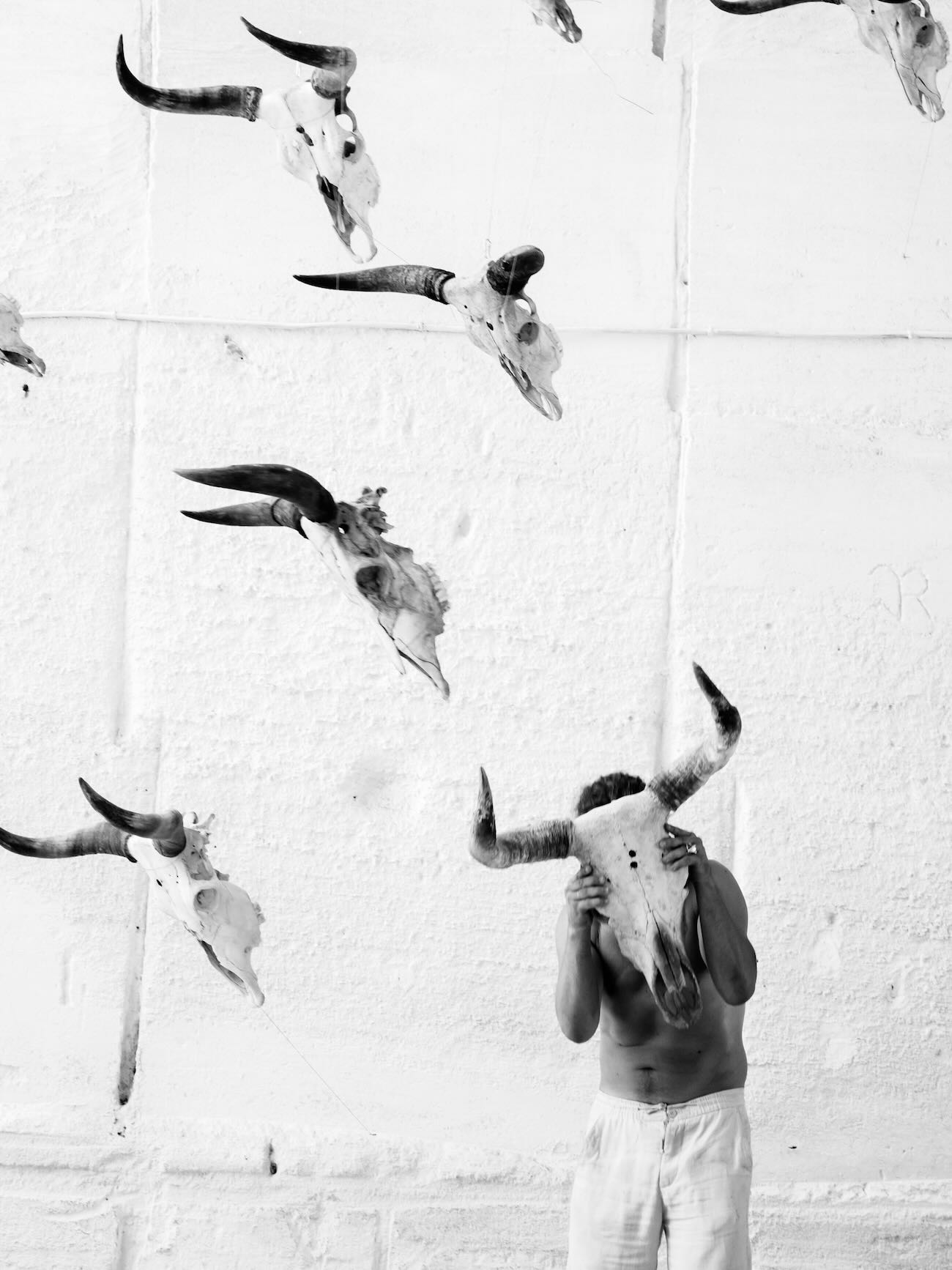
Afterwards, I collected their skulls. I cleaned them with Marcel, then brought them back to their land, to the Vaccarès, and mounted them on wooden posts. They became Les Gardiens de l’immensité (Guardians of the Vastness). I wanted to give those lives a presence again, to respond to what I had witnessed.
That is where Mouvement Delta comes from. And beyond the idea of defending something, I want to tell the story of this land through the people who inhabit it. When they lose the ability to live here, to care for the land and pass on their knowledge, an entire relationship begins to unravel. That is what drives me forward.
Why did you choose the word “movement” rather than “project”? What is Mouvement Delta intended to set in motion: artists, local communities, scientists, producers, institutions — or all of them at once?
I chose the word “movement” because I want others to take ownership of it, to turn it into something I could never have imagined. I want it to continue beyond me.
I am convinced that our times need an artistic movement rooted once again in the countryside, in these lands and the people who inhabit them.
Poetry gives us the freedom to speak out, to challenge established norms. Frédéric Mistral is a great source of inspiration for me in that respect. He championed a language, a culture, a way of life. With the Museon Arlaten, he also gave a place to objects, traditional practices and collective memory. I often say that he brought poetry into politics.
The delta itself is a movement. Water flows down from the mountains, passes through cities, carries sediment that settles and creates new land. The Camargue is built on that silt beneath our feet.
In turn, we bring what originates here back into the city. In the first year, I erected seven skulls above the entrance to the Hôtel Doutreleau, on Rue des Arènes in Arles. My grandmother was born in that house. You can still see one of those totems as you walk up towards the arena. The bulls were returning to the city, and to her own history too. It was a way of paying tribute to her.
I then exhibited these works at the Jules César, the Manuel Rivera-Ortiz Foundation and on the town hall square.
That bridge between the land and the city means a great deal to me. I connect the marshes where I grew up with the streets of Arles. Pia Copper and Julien Batifol helped me make those first connections with the art world. At Galerie Sinibaldi, together with Manifeste Esthetic, we created a tower of 89 heads. These encounters gave new forms to what I had brought back from the land.
At the heart of it all are always those fishermen, gardians, shepherds and reed cutters. I call them the scientists who never wrote books.
Around them come artists, chefs, researchers, architects and institutions. I want their knowledge to interact, to challenge one another, even to disagree. When someone takes a material or an idea and transforms it into something I hadn’t anticipated, the movement begins to take on a life of its own.
I often say that you are not born Camarguais — you become one. Through your commitment, through the time you spend with this land, through what you learn from those who live and work on it. I grew up here, but that relationship is still evolving. Everyone can find their place within it.
The delta triangle has long appeared in your work as a kind of signature. What does it represent to you today: a geographical territory, an ecosystem, an identity, or almost a way of looking at the world?
It’s a symbol. It’s a triangle, it’s a delta. And above all, it’s three points. The third point interests me because we are too often trapped between two opposing ideas. Humanity on one side, nature on the other. Protect or exploit, allow or prohibit.
What’s missing is permeability, a space where something can still flow between them. I think of Pointe de Mornès, of the routes taken by herds towards the Bois des Rièges, which I call our Provençal mangrove.
I want us to think about movement and passage too, about what transhumance preserves and what it transforms.
What place do we give to the shepherds, gardians and rice farmers who know these landscapes so intimately? For me, that space of connection is the third point.
The delta is also the silt beneath our feet. This land comes from elsewhere, settles, and then life and cultures develop upon it. I added an arrow to the triangle. It carries something of the Mistral wind, but above all, it represents action.
When I see a marshland suffering, I think about opening a martelière, one of those sluice gates that allows water to circulate. About responding here and now.
I often say that we must save life in the present. Driving a post into the ground is part of that too: giving tangible form to what we refuse to let disappear.
Your early works connected to the Delta are deeply physical, featuring bull skulls, mud, salt, glasswort, barbed wire, water… Why was it important for you to work with the very materials of the Camargue rather than simply represent them?
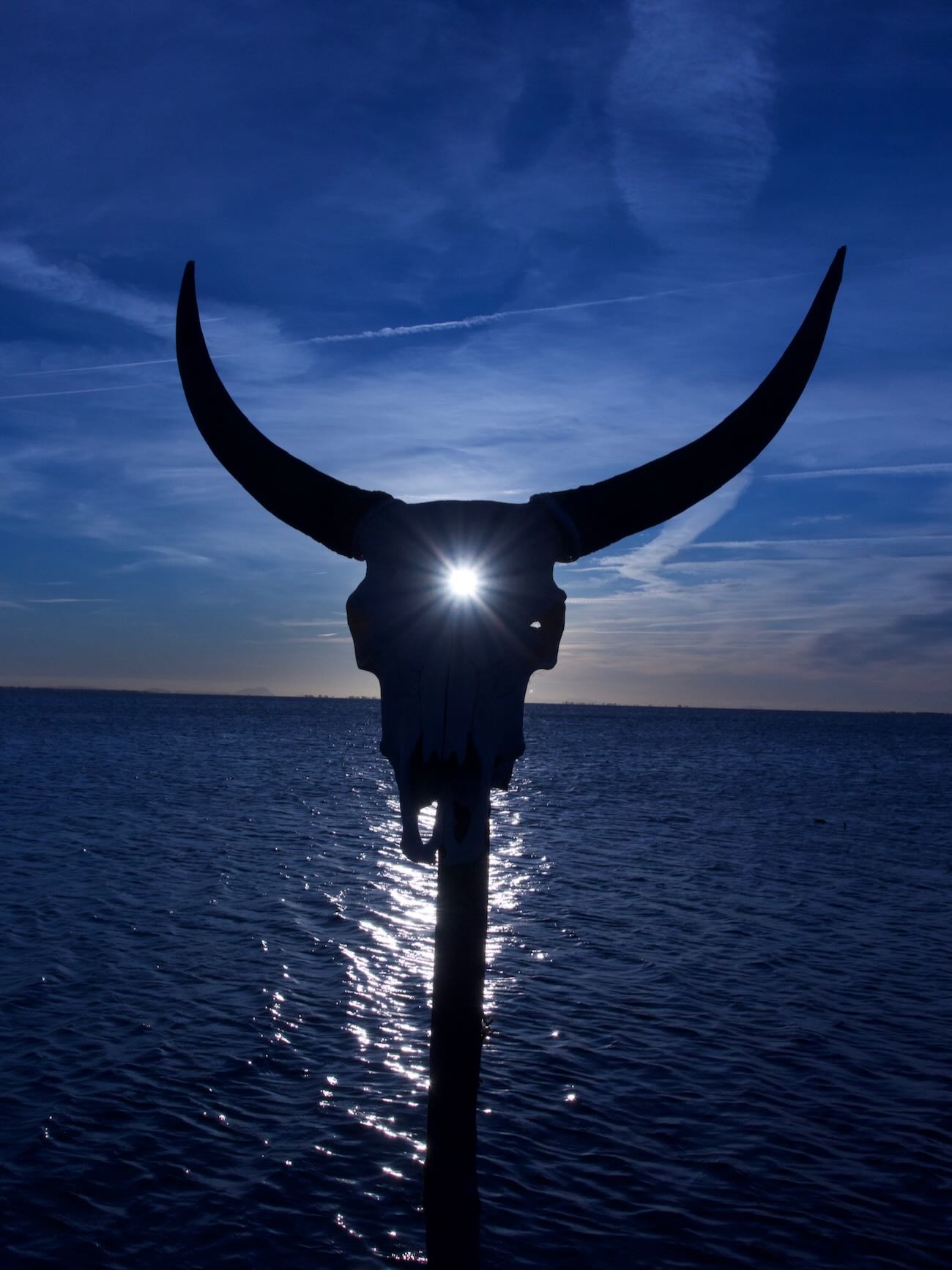
The materials came naturally from what I was experiencing. After that journey in the truck, I had to retrieve those heads, to carry them. Marcel had worked at the slaughterhouse. He taught me how to handle them. Together, we cut and cleaned the heads. What we call a massacre is the skull with its horns still attached. In the middle of the forehead was the hole left by the Matador, the captive-bolt gun used for slaughter.
I brought those heads back to their land, to the Vaccarès, at Trou de l’Or. One full-moon evening in June 2021, I drove a wooden post into the ground and mounted a skull on it, facing the setting sun.
In the mornings, when I went to photograph them, I could see the light of the rising sun shining through the hole. That mark of death was illuminated. In a way, it brought those faces back to life. That’s when I began saying that the hole is the question and the post is the answer.
There was still a little flesh left on those skulls. In the mud, it gradually decomposed. The land itself completed their transformation. Then spiders began taking shelter inside the holes. At night, they would emerge from the skulls and spin their webs between the horns to catch mosquitoes. I had brought those bulls back to their land, and life was already finding its way back into them.
Since then, 107 skulls have passed through my hands. That’s 107 faces. Each has its own shape, its own marks. The bulls have names too. We call them, recognise them, know their personalities.
There was someone who lived alongside each of them. When I work on a skull, I think about that particular animal, its breathing, what it once was. Within the herd, I try to rediscover the individual.
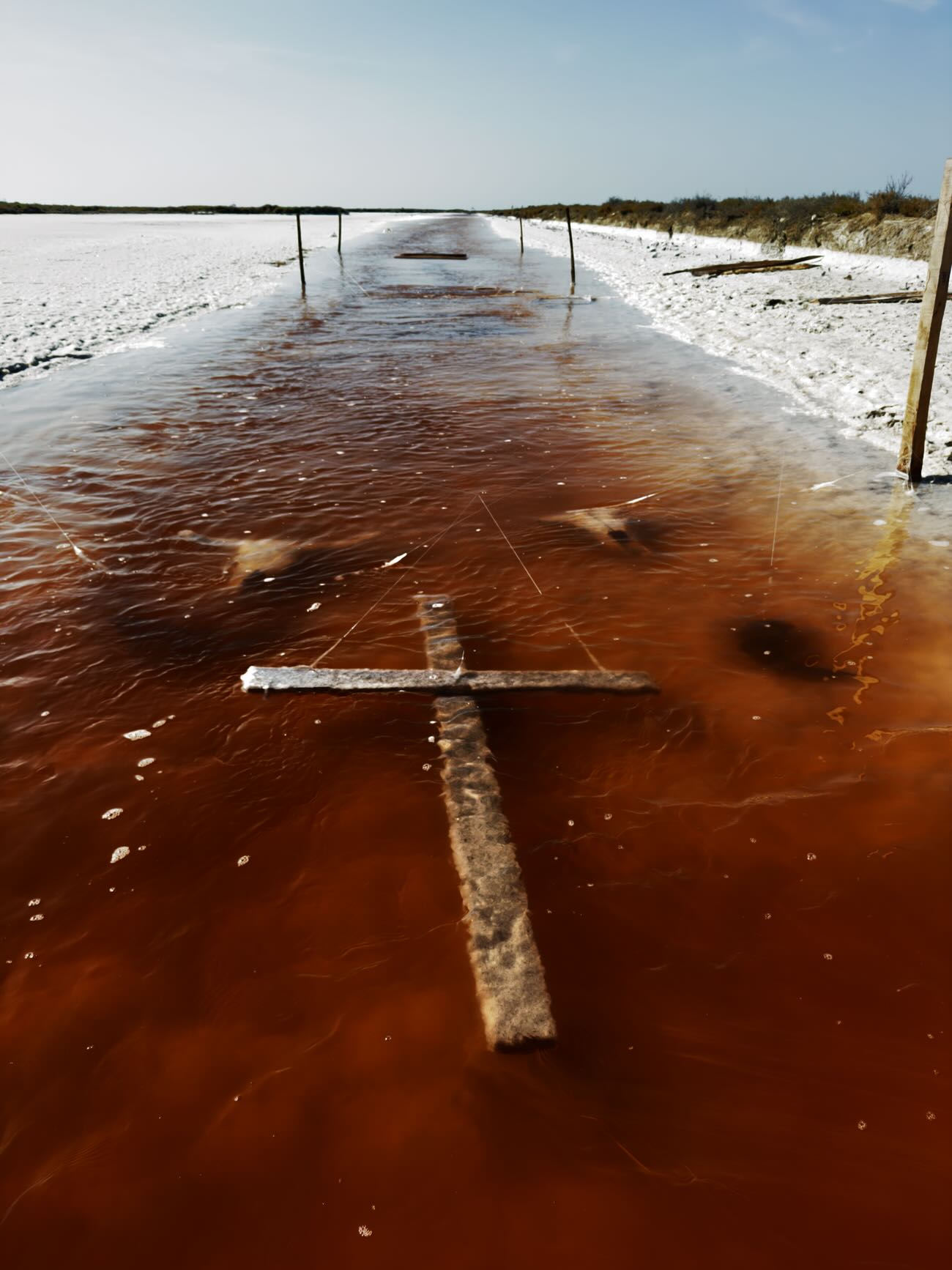
Les Gardiens de l’immensité (Guardians of the Vastness) also speaks about the suffering of the Vaccarès lagoon, about its extraordinarily high salinity levels.
I denounce the lagoon’s distress and a form of conservation that turns it into a sanctuary while excluding the very people who know how to manage it.
In my view, that exclusion only makes the problem worse.
I was five years old. My father would wake us around four in the morning by pressing a cold washcloth against our faces. At the farmhouse, we drew lots for the hunting positions. Then we climbed into the barquet, a flat-bottomed boat propelled with a long pole called a partègue. There was my father, us children and the dog.
We were moving around, making noise. He told us to stop, to stay completely still. And suddenly, everything became audible. The reeds, the birds, the frogs, cries in the darkness. I remember the smell of his cigar, the wet leather, the mud. Something of that mud remains inside me.
That’s how the Camargue enters you: through the body. A skull has weight, barbed wire catches your skin, silt holds your feet.
Opening a sluice gate, riding a horse, driving a post into the ground — all these things demand physical engagement. I compose with these materials as I would in cooking. They have their own resistance, and they teach me how to work with them.
As soon as you intervene on this land, you encounter boundaries, established practices, regulations and permissions. Rules become part of the work. I want to question them through physical gestures, to explore what they allow and what they prevent.
Glass extends this exploration. In Second Souffle (Second Breath), a bull’s tooth, through combustion, becomes part of the creation of a blown-glass relic. What remains of the animal contributes to another material.
Les Arènes de sel (The Salt Arenas), which I’m currently working on, also requires me to compose with wind, salt and time.
These skulls force me to confront death. It’s not death that haunts me, but avoidance, the act of turning away from it.
Making death visible means reintroducing a form of truth. In my work, life, love and death are intertwined. When you remove death, you understand love less fully.
At first, people told me these installations were ephemeral. But for me, it’s the act that matters. Wind, salt and time continue to shape the material. The gesture has taken place, and it can continue to resonate with those who witnessed it.
Patrick once told me: “Stanislas, you work with the wild, you don’t impose your will on it.” When you work with animals, a blow from a horn quickly teaches you what that means. Those words stay with me whenever I create.
With La Cuisine du Delta, you’ve turned the meal into another way of telling the story of the territory, from fresh water to salt water, from land to sea. When did you realise that cooking could also become an artistic medium?
Cooking has always been part of my life. As a child, they already called me “the sauce maker” because I could never resist dipping my finger into the sauce.
My father was an excellent cook, a true epicurean. I would watch him prepare his fish soup, strain it through a cloth, crush, filter and squeeze it again to extract every last bit of substance, that particular texture. He spoke of the substantifique moelle, the very essence of things.
The table, the art of welcoming guests, was part of my upbringing.
When we went hunting or fishing, I would ask the older men questions. What does a teal eat? Why does a snipe have that particular flavour? What kind of environment does it live in?
Behind all that were the stories told around the table, the mornings spent hunting, the people with whom we had shared those experiences.
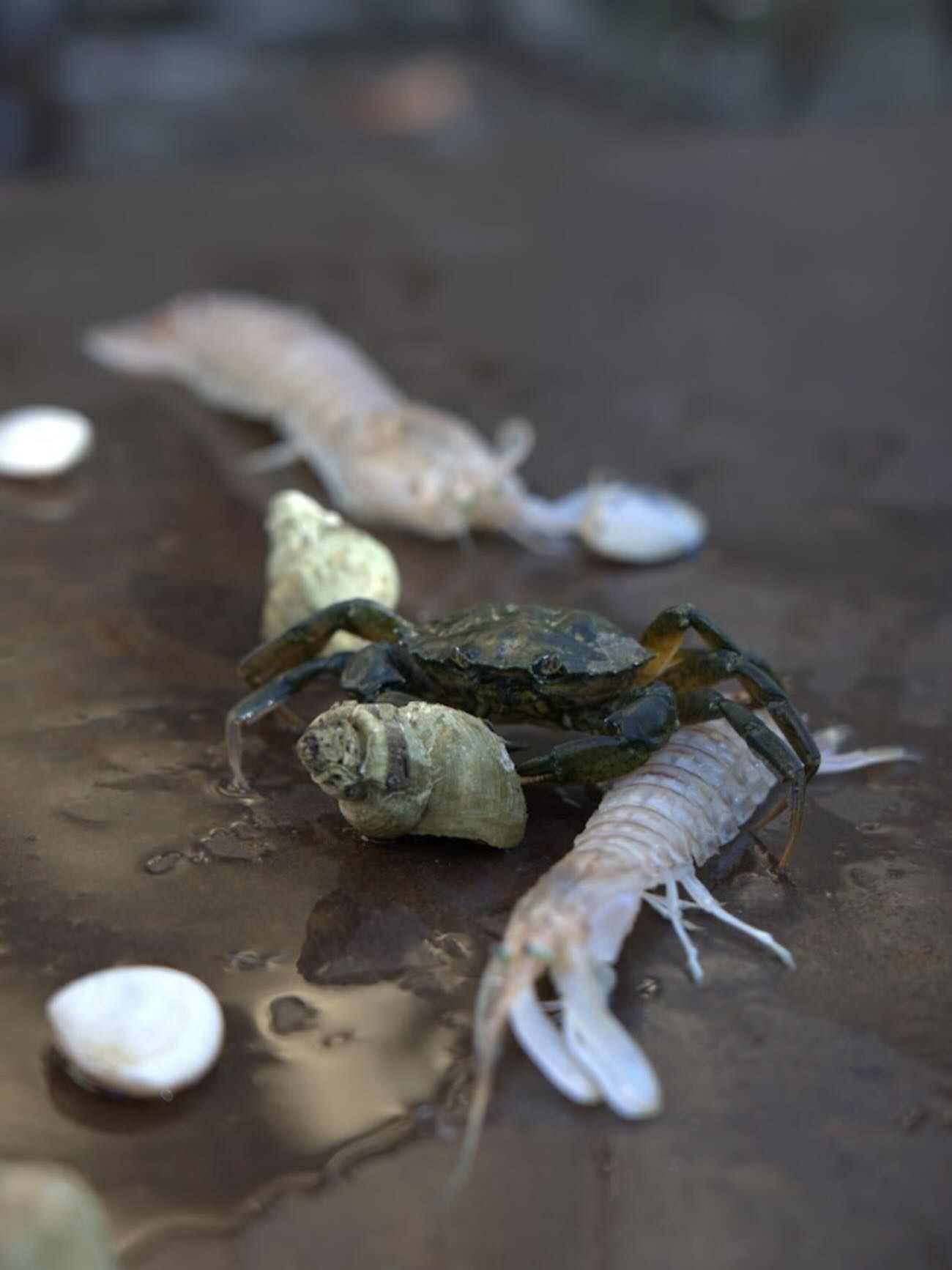
One winter morning, I was filming “Sans Chemise”, a fisherman from the Vaccarès who went by that nickname. In the cold, I watched him drive his posts into the water to reset his fishing nets.
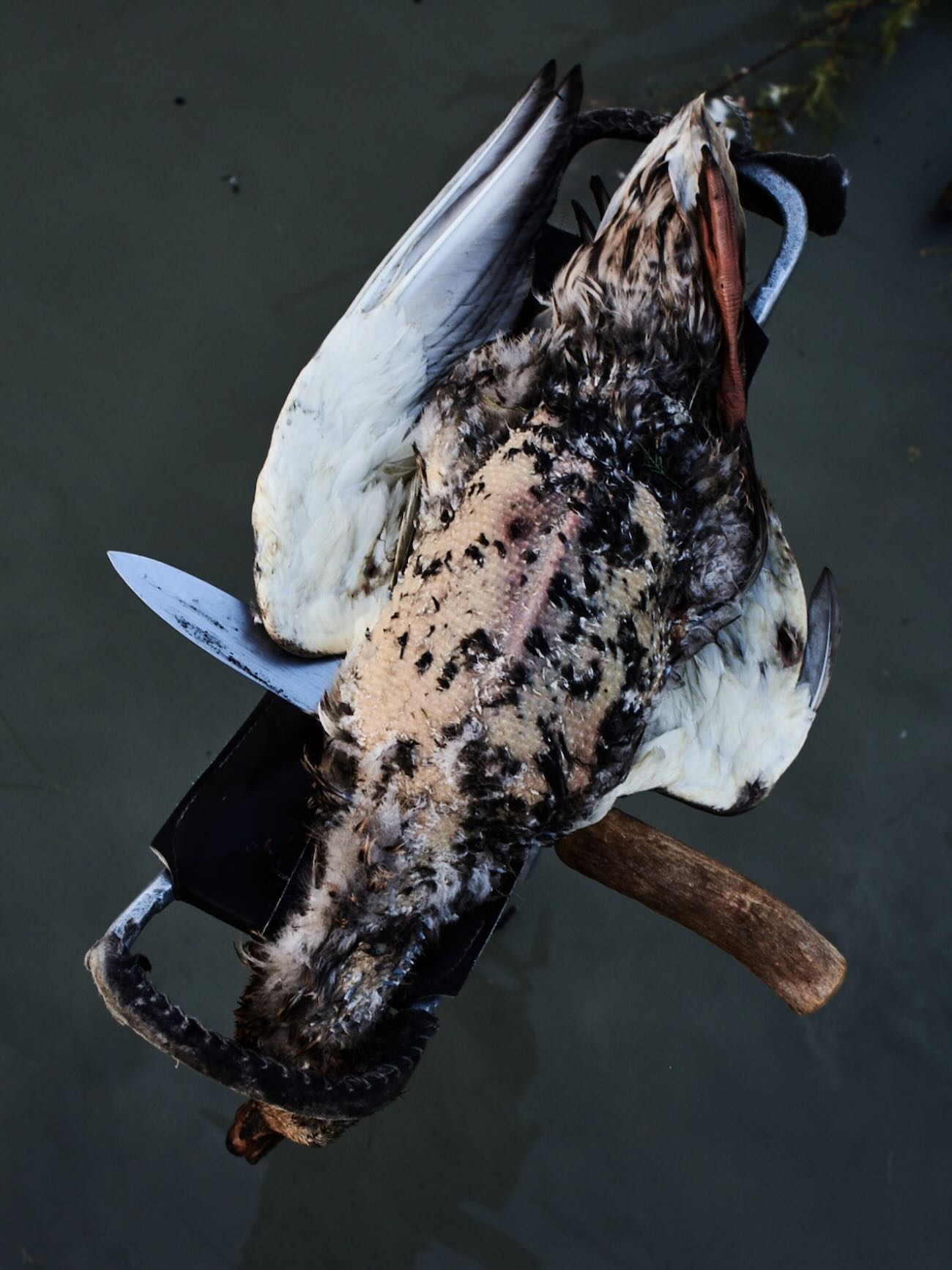
He gave me some live favouilles, those little crabs. In my Citroën C15 van, I had two dead teals from a hunting trip. I placed the teals on top of the crabs, in front of the camera. The favouilles were still moving. I was looking at a still life that was still alive.
That evening, I cooked. During the night, I drew the first charcoal sketches of La Cuisine du Delta.
The meal had found its geography. We would begin with fresh water, with the land, then gradually move towards salt water, with a hint of iodine building from one dish to the next. You can feel the sea and the salt approaching.
I called Armand Arnal. He opened the doors of La Chassagnette and brought his team into the research. Together with his kitchen brigade, we gave shape to this meal. He became a kind of editor of my vision.
The teal and the favouilles became a dish embodying that encounter. I prepare a favouille soup separately, using the teal carcasses to make the stock. The sauce brings these elements together, the iodine of the Vaccarès and the softness of the marshlands. What I had witnessed in the C15 finds its expression in flavour.
At La Chassagnette, this exploration also gave rise to lamb baked in a salt crust, pike-perch cooked in ashes and small fried fish from the Vaccarès.
The lamb enclosed in salt already raised questions about this land where salinity is gaining ground. These ingredients allow us to talk about salinisation, about the life sustained by water.
We share these ideas through a meal, through the pleasure of eating and discovering.
For me, the table is one of the most important places for human connection. We welcome people, exchange ideas and tell stories.
With La Cuisine du Delta, I bring to the table everything that has awakened my senses since childhood. And the Camargue enters the body.
La Cuisine du Delta brings together animals, plants, producers, traditional practices, but also sounds and landscapes. Ultimately, are you trying less to give people a taste of the Camargue than to help them understand how it works and how fragile its balance is, through the senses?
It’s through tasting the Camargue that you begin to understand it. A smell can instantly take me back to a marsh, to my childhood, to someone I knew. Taste reaches into that very deep memory. We absorb everything through our eyes, our sense of touch, our emotions, smells and temperature.
That’s the emotion I want to convey. These flavours carry memories with them. Behind them, there’s a marsh, a season, someone who got up early to set their fishing nets. That’s the life I want to bring to the table.
On certain full-moon nights, I record the bulls, their breathing, their cries when they fight. I also record the marshlands. That presence in the darkness becomes part of the artwork.
I move between cooking, sound and imagery because each medium offers a different way of experiencing the territory. It’s the idea of a total work of art.
I call it “cuisine of doubt” because I taste, I touch, I make mistakes, I start again. I let things simmer. The material can contradict the idea I had in mind. That’s how instinct becomes more refined, how intuition is developed through practice.
You become attentive to subtle nuances, you accept that there’s always something to learn. I also cook to discover what I think.
And above all, to pass on flavours, gestures and memories that are at risk of disappearing.
Behind these flavours are men and women, people who have been getting up every morning for generations.
Around a table, a fisherman, a scientist and an elected official can share the same experience. Afterwards, each finds their own words to describe what they have felt. The conversation begins with something they have experienced together.
For me, that’s where commitment can begin.
You were president of the association “La Camargue à l’UNESCO” and are now its vice-president. The organisation aims to bring together elected officials, farmers, scientists, associations and local residents. Where does the artist end and the environmental activist begin? Or do you believe there is no longer any boundary between the two?
I prefer to speak of commitment rather than activism. It comes from what I see, from the people I listen to, and from the need to find ways to make their voices heard.
Those who live and work on this land have animals, water and soil to look after. They often have little time to speak up, even though their knowledge should play a part in the decisions being made.
I chaired La Camargue à l’UNESCO for three years. Today, I’m its vice-president. That experience took me across a Camargue I had known since childhood, but whose diversity I came to appreciate even more deeply.
From Port-Saint-Louis to Aigues-Mortes and Le Grau-du-Roi, you encounter different histories and different local authorities. The Occitanie Region supports our project.
The association also seeks to build bridges between the Bouches-du-Rhône and the Gard, between Arles and the Camargue on the Gard side. Water flows across this territory, regardless of administrative boundaries.
We bring elected officials, farmers, scientists and local residents back around the same table.
This work has taught me how to engage with elected representatives and understand how decisions affecting these lands are made.
I’m also fighting against the proposed 400,000-volt overhead power line between Feuillane and Jonquières. This project, linked to the decarbonisation of the Fos industrial area, will shape the future of a landscape and the people who live there.
I want its consequences and possible alternatives to be examined with those people. It’s a very concrete example of how a decision can transform an entire territory.
In Côte d’Ivoire, I used to accompany Bonne-Maman along the red dirt roads to the medical clinics where she went to help.
What I remember most are the faces, the joy when she arrived, the way she reached out to people. That sense of care was passed on to me.
Just like my father’s gestures, my grandmothers’ stories, and everything Patrick taught me while working with the animals.
Today, I carry that forward through films, artworks and the association. I inherited a memory and a responsibility to pass it on to others.
The association allows me to bring these issues to decision-makers. A film, an installation or a meal allows me to make people feel them.
I move between these different forms of expression because they all concern the same people, the same land, and the same things that matter to me.
The Camargue is a territory shaped by both nature and human activity. How can we preserve its ecosystems without turning it into a static sanctuary, while allowing those who live there, raise livestock, farm or fish to continue their way of life?
By continuing to inhabit it. We need to think about nature as we would about another person. Ask ourselves what is happening to it, what it needs, and respond accordingly.
A gardian watches the grasslands because his animals depend on them. A fisherman watches the water, a reed cutter watches the reeds. They live with the consequences of their actions. For me, that everyday responsibility is what humanistic, relationship-based ecology is all about.
To understand a territory, you first need to be able to live in it. The old-timers used to dip a finger into the water of the roubines, those small canals, and taste it. They knew when it was too salty. Then they had to read the wind, open a martelière — a sluice gate — at the right moment, and keep the water circulating.
It’s a way of working with the land, like cooking, involving instinct, intuition and years of intimate familiarity with a place. Today, we have other tools at our disposal. I want these different forms of knowledge to come together.
When a fisherman disappears, we also lose someone who has been observing the same waters for forty years, carrying knowledge passed down by his father. There is a natural biodiversity and a social biodiversity that both need to be preserved and passed on.
I challenge a form of conservation that excludes those who live on the land from decisions about its future. The knowledge of a shepherd, a gardian or a rice farmer must count in those decisions.
We need to be able to listen to that knowledge and discuss it. Who decides how these places should be inhabited? That question must remain open to the people who actually live there.
And we must also examine the damage caused by our own practices and be willing to change them. What does the passage of a herd maintain? What does it transform? What might it damage? We need to observe these effects alongside the people who carry out those practices.
What concerns me most is losing the ability to act when we see an environment suffering. And if the fishermen, gardians, hunters and shepherds disappear, we lose those witnesses too.
I want young people to retain the freedom to learn here, to fish, farm, raise animals and hunt. They must be able to develop their own understanding of this land.
Hunting taught me to wait, to listen as the sun rises. I experience it as a form of active meditation with the territory. To inhabit a place requires that sensitivity and that responsibility towards all living things.
Climate change, rising sea levels and increasing salinity are already very tangible realities in the delta. Is Mouvement Delta also intended to become a laboratory where artists, scientists and local communities can imagine new ways of inhabiting this territory?
The laboratory already exists. It begins out in the field.
A gardian or a shepherd notices a new plant appearing. A fisherman sees a familiar passage changing. A researcher monitors changes in the water and soil. These observations need to come together and help us take action.
ZACAM, the Camargue Health and Environment Research Zone, part of the CNRS network of research zones, experienced La Cuisine du Delta during its general assembly in November 2025. It recognised the project as a tool contributing to research.
That matters to me because a sensory experience can also help us understand an environment and the people who live within it.
Together with Rudy Ricciotti and François Fontès, we are working on the gardian’s house. This icon of the Camargue raises a very concrete question: how can a gardian’s house reopen the debate about the presence of people on land from which they are now prohibited?
I want us to be able to justify that presence, to imagine the house as the home of someone who bears witness, who lives there, observes and cares for the environment.
We need more witnesses to help us adapt our relationship with these changing landscapes.
A gardian sees salt spreading into a new area, a plant appearing, water shifting. How do we imagine his daily practices and his home tomorrow?
The homes of fishermen, gardians and shepherds must be part of that conversation.
I’m also looking at Jean Prouvé’s Bungalow du Cameroun, Jean-Benjamin Maneval’s Bulle six coques, and Porky Hefer’s Flamant Rose de Troie.
These designs inspire our research into structures that can be dismantled and relocated, places where a resident, researcher or artist could stay.
What interests me is the life these architectures make possible and how they can adapt to their surroundings.
This research requires funding, time, residencies, and fair payment for those who create and pass on knowledge. We need to be able to test a proposal, observe its effects and adapt it.
Faced with climate change, I want us to preserve that ability to act together.
The gardian notices what is changing because he is there. That everyday knowledge can help us adapt.
After art, photography, installations, La Cuisine du Delta and your environmental commitment, what will be the next concrete expressions of Mouvement Delta? How far do you hope to take this movement and, above all, who would you like to see join it?
Since July 2026, Le Silence d’Orphée has transformed TROUPEAU, at the Val d’Enfer in Les Baux-de-Provence, into a place where other artists come to work.
When Audrey Freeman danced there, I saw my own installation differently. Beneath those motionless heads, a living body was dancing. The souls of the herd were returning to us, in a way, and the dance was bringing them back to life.
That encounter between the death of the animals and the movement of a living body fascinated me.
One work of art can give birth to another, while also transforming the person who created it.
The Trans(form)anse collective, led by Margaux Berger, works through immersion. Guillaume Queau is preparing a solo performance centred on the bull. Oiseau and Dame Blanche are composing sound pieces. Fred Chemama installed his Foz Machine for a nighttime photographic intervention.
Each brings their own artistic language and reveals something I could never have created alone.
On October 24, 2026, Rudy Ricciotti and Alexis Chiari will be at the Val d’Enfer for the first Voix d’Orphée gathering, devoted to emptiness.
An architect and a psychoanalyst will take these skulls, the spaces between the heads and the surrounding stone as their starting point. I want to see what their perspectives reveal. Emptiness is also a material.
One of these heads travelled to Cerveteri, near Rome, for a performance with Alberto Sorbelli. That experience also opened up conversations about cinema with Philippe-Alain Michaud and Mitra Farahani.
And among the things taking shape now, there is also writing.
It was my father who encouraged me to collect all those heads. When I went to retrieve the first ones from the slaughterhouse, after seeing the look in Patrick’s eyes, I was given the opportunity to take several.
It seemed crazy. I didn’t yet know what I was going to do with them.
My father had just learned of his illness and was entering his own battle. The idea that those bulls had been denied theirs was unbearable to him.
He told me, “Take them all. Take as many as you can.”
He gave me the courage to pursue that madness which, today, no longer seems mad at all. He inspired everything that followed.
One evening at the Val d’Enfer, I sat beneath the first skulls. I was exhausted. I cried because I wished my father could have seen it.
He didn’t need to understand. He had already understood everything.
He had told me to carry on. So I carry on.
I’ve written a short story about those bulls that died without a fight, the gestures of the gardian, everything I experienced after that journey in the truck.
My father, Patrick and life at Carrelet are all present in it.
I want this story to find another voice. I would love my friend Slimane Dazi to read it.
He filmed at Mas de Carrelet with Tony Gatlif for Tom Medina. Patrick had already introduced him to the gestures of the gardian he portrays in the film.
Heritage is passed on in this way too, through a story that someone else can receive and carry forward.
It’s that life surrounding the Blohorn manade that I want to share.
I want to meet the inhabitants of other deltas and wetlands, to let artworks and flavours travel.
La Cuisine du Delta has already reached Gstaad. Now I’d like to take it further upstream towards Geneva, carrying the flavours and stories that took shape here, at the mouth of the Rhône.
We’re at the end of the river, but everything that reaches us comes from further upstream. So let’s travel back towards its source.
Exchanges are developing with Venice around totems, glass and traditional craftsmanship, beyond the framework of the Biennale alone.
Connections are also emerging with Les Grandes-Serres in Pantin.
I want places where films, photographs, cooking, dance and installations can come together and be experienced.
I’d love to bring Emanuele Coccia, Baptiste Morizot and Gilles Clément into contact with the artworks and the local people.
To begin with a marsh, a skull, a meal, and see what questions emerge from that encounter.
I’m also inviting Alexandre Mazzia, Nadia Sammut and Emmanuel Perrodin to work with these materials and stories, to bring them to the table.
And I’d like to involve Matthieu Poitevin in our thinking about housing and habitats.
I want them to work alongside fishermen, gardians and farmers, without whom we’re nothing more than intellectuals in rubber boots.
I’d love foundations such as LUMA or TBA21, for example, to take an interest in this research, to host and fund it.
To help us give these projects continuity, welcome artists, pay people for their work, and create opportunities for residents and researchers to meet.
Above all, I want young people to find a place here, the tools and the freedom to create and speak out.
To experiment, make mistakes, and teach us something in return.
The physical forms may disappear. But if a memory, a way of seeing and a way of working together live on through them, the movement will have fulfilled its purpose.
That seed of empathy that led me to pick up a camera, climb into a truck and drive a post into the ground — I want it to grow in others.
So that those who come after us still have a land they can live in. So that they, in turn, can ensure its legacy is passed on.
Mouvement Delta is also their springboard, a school of real life where creation becomes an act of resistance.
For every heart willing to fight, love is the horizon.
Interview by Eric Foucher / Photos: EF and Stanislas Blohorn
